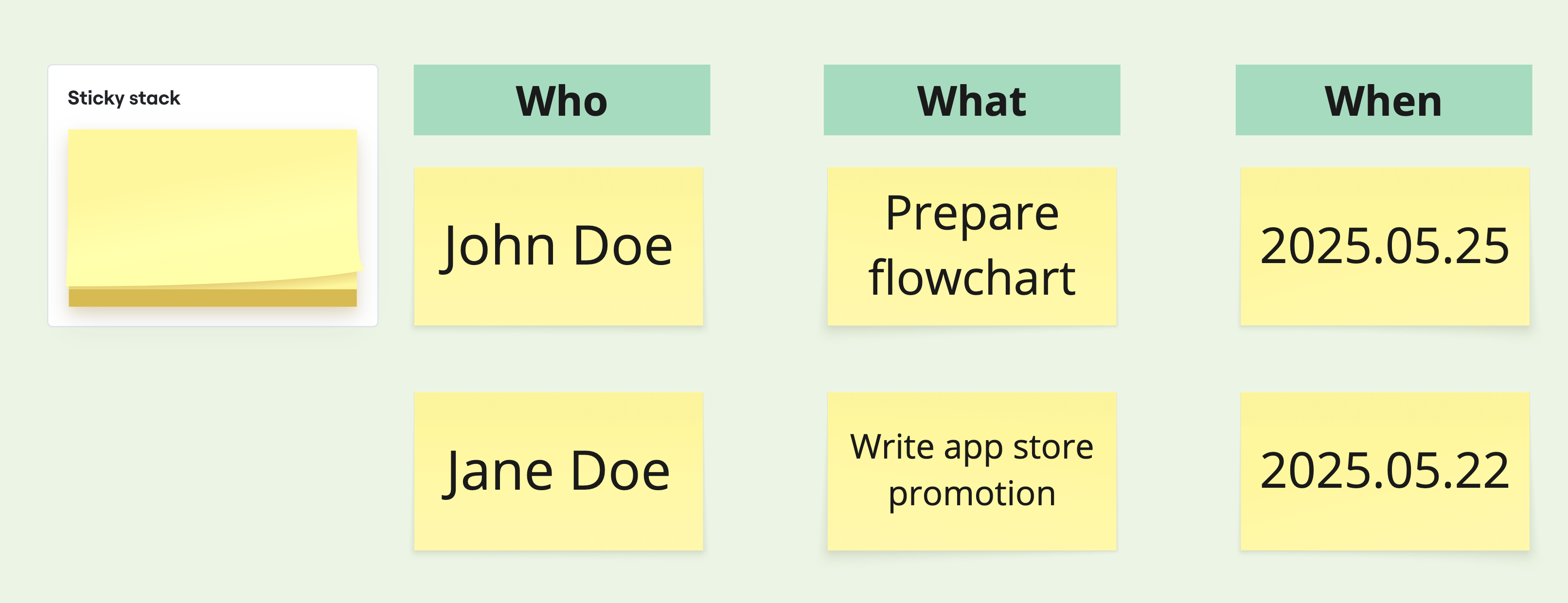
Sometimes the team comes up with action points, often in the form of tasks. How can we make sure those tasks actually get done? The "Who, What, When" framework is a simple way to define responsibilities, tasks and deadlines. Since it was introduced to our team, we've improved in getting the tasks done. It's a straightforward approach that can be applied to any team or project.
Who
The "Who" identifies the person accountable for driving the task to completion. Assigning a task encourages ownership. A common trap is assigning a task to an entire group: when everyone is responsible, often no one is.
If a task requires collaboration across multiple people, still name a single Directly Responsible Individual (DRI). The DRI doesn't have to do all the work alone, but they own the follow-through, unblock teammates, and ensure the action item reaches the finish line.
What
The "What" describes the specific task or action that needs to be completed. It should be clear and to the point. Define what "done" looks like with clear wording to help prevent misunderstandings.
When
The "When" sets the deadline or timeframe for the task. Having a clear deadline helps with prioritization and makes it more likely the task gets done on time. "By Friday's standup" or "before next sprint planning" works far better than "soon."
How to Use the Framework
As discussions unfold, start identifying action points—these are the tasks that need to happen. Each task should be clearly assigned to a primary DRI, even when executed by a pair or team, so there's zero ambiguity about who drives it. Agree on realistic deadlines to keep momentum. After the meeting, follow up regularly to see how things are going and offer support if needed.
At the next meeting, review the status of the action points. If something hasn't been done, talk about why and adjust the plan if necessary to get back on track.
"Who, What, When" is a lightweight accountability tool that keeps commitments visible and prevents action items from dissolving into good intentions.
This framework pairs well with a broader look at how your team organizes its work. If you're thinking about that, Ways of working explores the bigger picture of how a team actually gets things done.