Choosing a team name can be more than a fun activity—it is often the first collective act of shaping team identity, building cohesion, and establishing a shared purpose. When our team was first formed, we needed to define who we were. Left unstructured, naming sessions can drift into endless debates or default to whoever is most vocal. To make the process engaging and meaningful, a lightweight workshop structure helps channel creativity into a name that genuinely resonates.
Why team identity matters
A team name isn't just an email alias or a Jira board label. It creates an immediate sense of identity and belonging. It signals what the team values, how they perceive their mission, and gives people a shared banner to rally behind during challenging deliveries. A name chosen collectively builds early buy-in, whereas a name handed down from above often feels artificial.
Step 1: Breaking the ice with name origins
An engaging icebreaker sets the tone for psychological safety and open dialogue. Begin the workshop by asking each participant to share the story behind their own name: its cultural meaning, origin, how their parents picked it, or a lighthearted nickname anecdote.
This activity immediately levels the room. It shifts the atmosphere from formal work discussion to personal storytelling, building empathy and making it easier for quieter members to speak up.
Step 2: Uncovering shared values and qualities
Before jumping into actual names, set the stage by focusing on qualities rather than words. What should the team stand for? What kind of spirit or mission should the name evoke?
Encourage participants to brainstorm attributes on sticky notes or a digital whiteboard for five to ten minutes. These can range from professional strengths (resilience, speed, craft, reliability) to cultural traits (curiosity, playfulness, calm under pressure) or architectural domain themes.
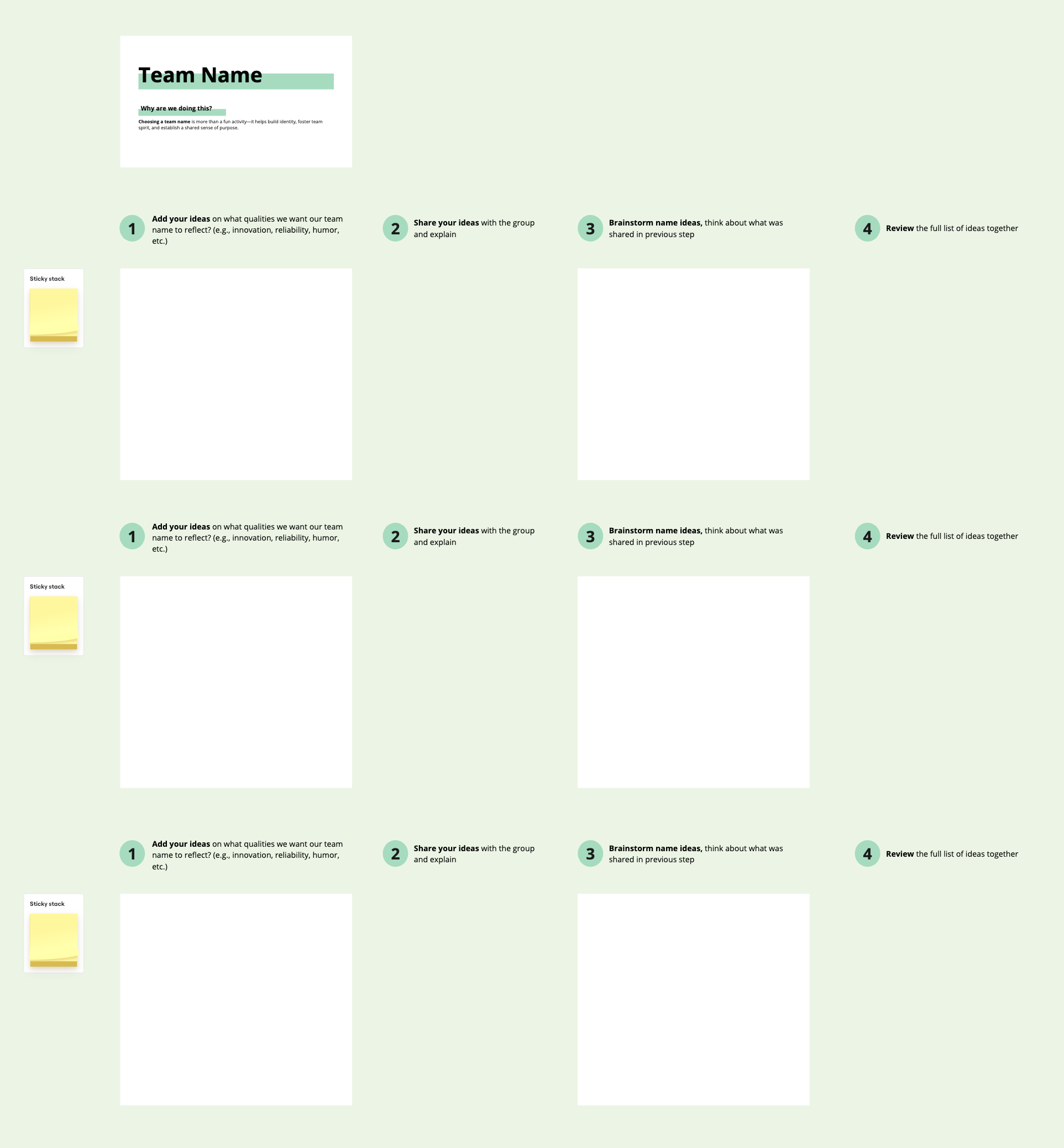
Cluster similar notes and review the themes together. This step aligns the group's vision and ensures the subsequent name generation anchors in agreed-upon attributes rather than random words.
Step 3: Divergent brainstorming
Once the qualities are clear, transition into brainstorming potential names. Remind everyone that divergence is the goal: no idea is filtered, judged, or dismissed at this stage.
Prompt the team to combine the qualities identified in Step 2 with different naming motifs:
- Domain metaphors: Navigational, architectural, astronomical, or mythological terms.
- Acronyms or playful wordplay: Short, punchy concepts that reflect the team's charter.
- Abstract or understated concepts: Names that reflect calm stability and focus.
Step 4: Converging on a decision
Narrow down the list using dot voting (giving each person 3 votes). Once the top two or three candidates emerge, test them against real scenarios:
- How does it sound when introducing the team to leadership or external stakeholders?
- Does it reflect an inclusive identity everyone feels proud to be associated with?
- Does it avoid confusing acronyms or inside jokes that alienate future hires?
Select the name by broad consensus. If there is a tie, hold a brief runoff discussion focused on the underlying team qualities identified earlier.
Final thought
Naming is one small but deliberate step in establishing a healthy team culture. It transforms a collection of individuals into a cohesive unit with a shared identity. For more on the deeper foundations that make teams thrive over the long run, see Culture, Psychological Safety and Team Health.